

 See My Latest Article on HelloNation

Luxury vehicles are designed as integrated systems rather than collections of interchangeable parts. The engine, transmission, suspension, electronics, safety equipment, and software are developed to work together with specific tolerances. For that reason, the choice between an original-equipment part and a less expensive substitute can affect more than appearance or convenience.
OEM stands for “original equipment manufacturer.” In practical terms, an OEM part is produced for the vehicle manufacturer or made to the manufacturer’s specifications and supplied through its parts system. Some parts may be manufactured by the same supplier that built the original component, but the packaging, quality controls, testing, and warranty terms can differ.
What makes OEM parts different?
OEM parts are designed for a specific vehicle platform, model year, engine, trim level, and production configuration. That specificity helps ensure that the replacement part matches the original in dimensions, materials, electrical resistance, pressure ratings, software compatibility, and mounting points.
Aftermarket parts vary widely. Some are carefully engineered and perform well. Others may be made to fit a broad range of vehicles rather than one exact application. A part can appear compatible while still creating problems with fit, performance, noise, vibration, or long-term durability.
The distinction is especially relevant in luxury vehicles because many systems operate with tight tolerances. A small difference in a sensor, seal, control valve, or suspension component may affect several related systems.
Why does fit matter so much in luxury car repairs?
Correct fit reduces the risk of secondary problems. A replacement component that is slightly misaligned or manufactured with different tolerances can place stress on adjacent parts. It may also create rattles, leaks, uneven wear, warning lights, or recurring diagnostic trouble codes.
Examples include:
- A suspension component with different geometry can change ride height, steering response, and tire wear.
- An engine sensor with an incorrect response range can affect fuel mixture, emissions performance, or drivability.
- A cooling-system component with a different flow rate can contribute to overheating or inconsistent cabin temperature.
- A replacement window, bumper, or body panel that does not fit precisely can allow water intrusion, wind noise, or corrosion.
- An electrical module that is not correctly programmed may communicate poorly with other control units.
Luxury vehicles often use multiple control modules that share data over the vehicle’s communication network. A part that functions mechanically but does not communicate correctly can still produce a major problem.
Are OEM parts important for safety systems?
Yes, particularly for components connected to braking, steering, restraint systems, lighting, driver assistance, and vehicle structure. These systems are engineered as a group, and a replacement part may influence how the vehicle responds during an emergency.
Advanced driver-assistance systems can make part selection even more significant. Radar units, cameras, parking sensors, windshield components, grilles, bumpers, and suspension parts may affect how a vehicle detects lanes, vehicles, pedestrians, or obstacles. After a collision or alignment-related repair, calibration may be required.
Using the correct part does not automatically make a repair safe. Proper installation, programming, torque specifications, and calibration are also necessary. However, the correct part gives the repair a better starting point because its dimensions and operating characteristics are known.
Airbag-related components require particular caution. Used, damaged, improperly stored, or poorly manufactured restraint parts can create serious risks. Safety-related repairs should not be evaluated only by comparing the purchase price of two parts.
Does using an aftermarket part void a vehicle warranty?
Not automatically. A vehicle manufacturer generally cannot reject an entire warranty simply because an aftermarket part was used. However, warranty coverage may be disputed if the manufacturer can show that the replacement part caused the failure or contributed to the damage.
Warranty terms also differ by component. A replacement part may carry its own limited warranty, while labor, diagnostic time, related damage, or repeat installation may not be covered. The vehicle owner should review the written warranty and repair documentation rather than relying on a verbal assumption.
A useful repair record identifies:
- The exact part installed
- Whether it was OEM, aftermarket, remanufactured, or used
- The part number and application
- Any programming or calibration performed
- The warranty period and exclusions
- The reason the part was selected
This information can be valuable if a problem returns or if the vehicle is later sold.
Are OEM parts always the best choice?
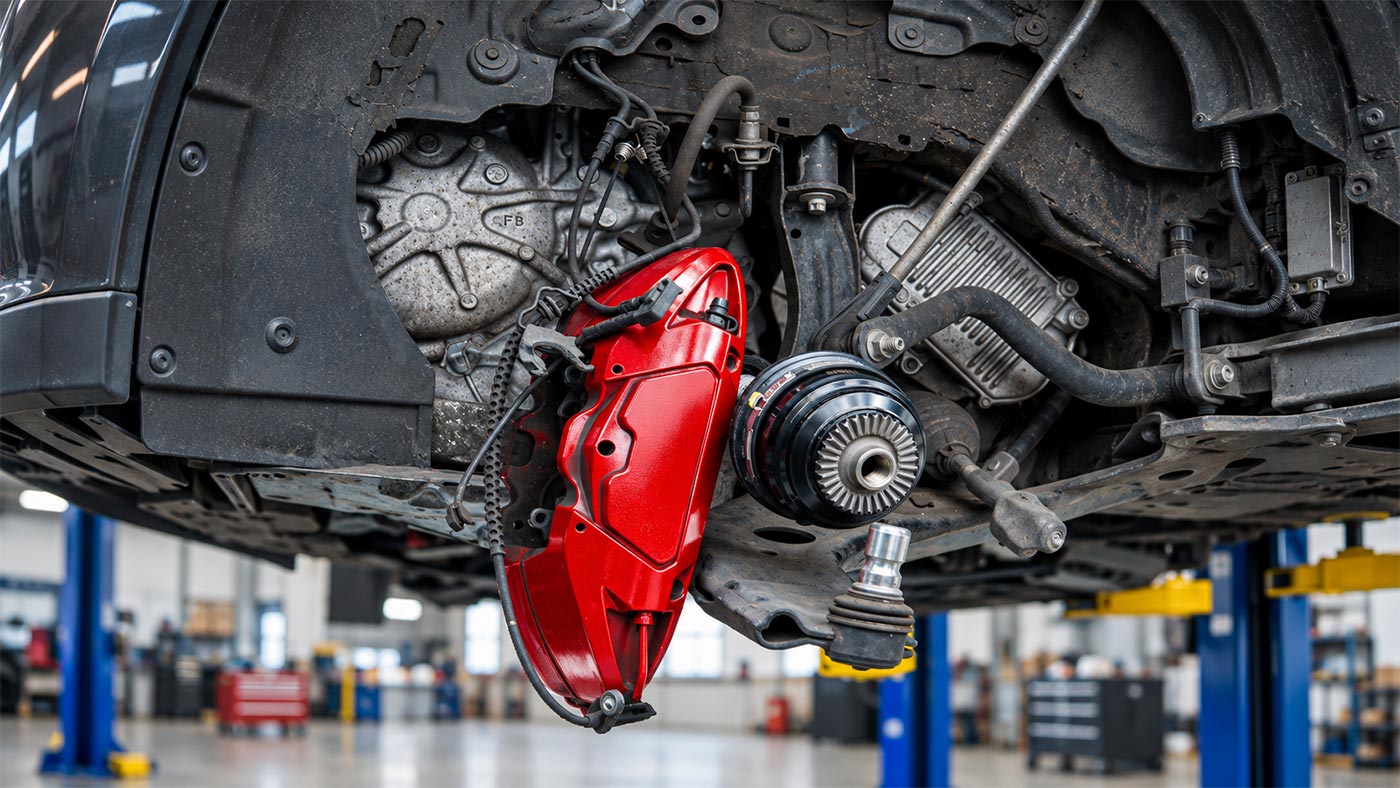
OEM parts are not automatically necessary for every repair, and a reputable aftermarket part can be a reasonable choice in some situations. The decision depends on the component, the vehicle’s age, the purpose of the repair, availability, and the quality of the alternative.
Aftermarket parts may be practical for items such as certain filters, wiper blades, batteries, tires, or routine maintenance products, provided the specifications are correct. For critical electronic modules, sensors, suspension components, cooling-system parts, emissions equipment, and structural or restraint-related components, the consequences of an incorrect match are greater.
Remanufactured components also require careful evaluation. A properly remanufactured alternator, starter, steering rack, or transmission may offer good value, but quality depends on the rebuilding process, replaced internals, testing standards, and warranty. “Remanufactured” does not mean identical to new, and “aftermarket” does not always mean poor quality.
How do local driving conditions affect the decision?
Atlanta’s heat, humidity, heavy rain, traffic congestion, and frequent stop-and-go driving can place additional demands on cooling, braking, air conditioning, electrical, and suspension systems. Seasonal temperature changes can also expose weak batteries, aging seals, and marginal cooling components.
Road surfaces, construction zones, uneven pavement, and curb impacts may contribute to wheel, tire, steering, and suspension wear. In these conditions, an exact-fit component can help preserve the vehicle’s original geometry and operating behavior.
Humidity and water exposure also make sealing and corrosion resistance relevant. A body component, connector, sensor, or underbody shield that does not fit correctly may allow moisture into areas that were designed to remain protected.
What questions should an owner ask before approving a repair?
The most useful questions are specific rather than confrontational:
- Is the part OEM, original-equipment supplier, aftermarket, remanufactured, or used?
- What is the exact part number?
- Is the part designed for this vehicle’s model year and configuration?
- Does the repair require software programming or system calibration?
- What warranty covers the part, and does it cover labor?
- Could using this part affect another component or an existing warranty?
- Is there a technical reason to prefer one option over another?
- Will the old part be available for inspection if appropriate?
A written estimate should clearly identify the part category and any related labor. If a substitute is proposed, the decision should be based on documented specifications and expected performance rather than price alone.
When is choosing OEM especially sensible?
OEM parts are usually the more conservative choice when the repair involves safety systems, complex electronics, emissions equipment, vehicle structure, precision sensors, or components that are difficult to access. They may also be sensible when the vehicle is newer, still under warranty, highly specialized, or expected to retain strong resale value.
The central issue is not that every non-OEM part will fail. The issue is that quality and compatibility vary, while luxury vehicles often leave less room for dimensional, electrical, or software differences. Choosing a properly matched component—and confirming that installation and calibration follow vehicle-specific procedures—helps preserve the performance, safety, and reliability the vehicle was engineered to provide.